Body Pro Beauty | Medical Aesthetics Education
Medical Aesthetics Diploma
Hands-on education in advanced skincare, laser and IPL
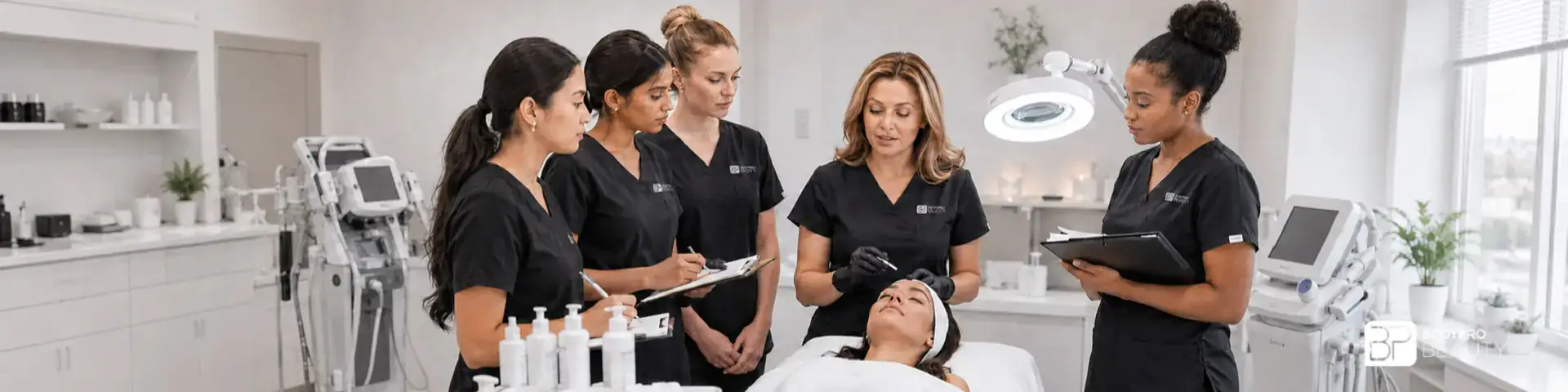
Body Pro Beauty & Aesthetics Academy Inc. offers a Medical Aesthetics Diploma pathway for students in Brampton and across the Greater Toronto Area who want hands-on education in advanced skincare, laser, IPL, Hydrafacial services, microdermabrasion, chemical peels, photo rejuvenation, body-contouring technologies and professional client care.
Students complete an integrated curriculum in advanced skincare and aesthetic-device technologies through theory, instructor demonstrations and supervised practical learning. Graduates who successfully meet the full program requirements receive Body Pro Beauty’s official Para-Medical Skincare Technician Diploma.
Registered Career College | Supervised Practical Learning | Full-Time and Part-Time Options | Serving Students Across the GTA
Flexible, Interest-Free Payment Options for the Medical Aesthetics Diploma
What Is a Medical Aesthetics Diploma
At Body Pro Beauty & Aesthetics Academy Inc. in Brampton, the official credential awarded is the Para-Medical Skincare Technician Diploma. The program combines theory, instructor demonstrations and supervised practical learning to help students develop equipment knowledge, safety awareness, consultation skills, documentation practices and professional client-care habits for advanced aesthetics settings.
Body Pro Beauty & Aesthetics Academy Inc. is registered as a career college under the Ontario Career Colleges Act, 2005. Prospective students should confirm the current curriculum, schedule, tuition, admission requirements, practical components and credential details with admissions before enrolling.
Program Schedule: Full-Time and Part-Time Medical Aesthetics Training
Body Pro Beauty’s Medical Aesthetics Diploma is available in full-time and part-time formats for students pursuing advanced skincare, laser, IPL and aesthetic-device education.
Full-Time
Designed for students who prefer a concentrated weekday schedule for completing the diploma curriculum and supervised practical learning.
Part-Time
One-year weekend format
Designed for students balancing work, family or other commitments while developing knowledge of advanced skincare, laser and IPL, cosmetic service planning and professional client care.
Both formats cover the same curriculum and lead to the official Para-Medical Skincare Technician Diploma. Contact admissions to confirm current class times, start dates, attendance requirements and availability before enrolling.
Medical Aesthetics Diploma Curriculum
The Medical Aesthetics Diploma combines advanced skincare theory, instructor demonstrations and supervised practical learning across ten curriculum areas. Students develop knowledge of client consultation, visible skin characteristics, contraindications, equipment safety, cosmetic service planning, documentation, product use and professional client care within appropriate scope.
What You Will Study: 10 Curriculum Areas
Laser Technician
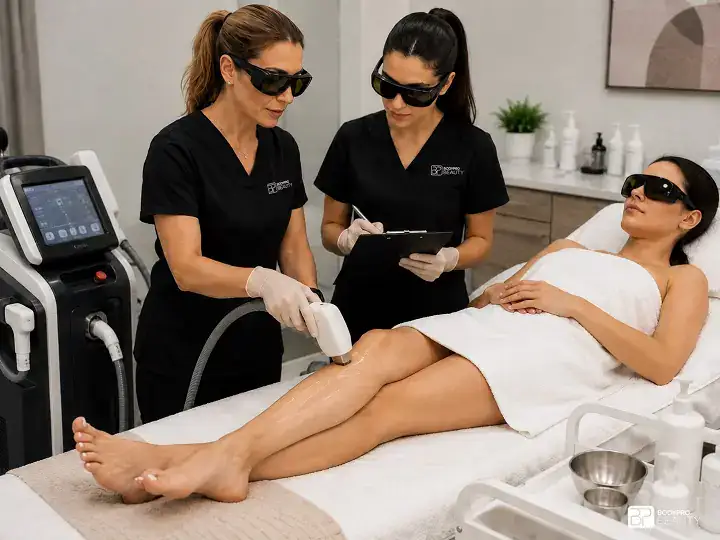
Students study laser principles, wavelengths, skin and hair considerations, contraindications, equipment safety, eye protection, client consultation, documentation and supervised program-specific procedures. Training focuses on cosmetic laser applications and hair-removal education within appropriate professional scope.
Interested in focused training?

HydraFacial
Students study Hydrafacial principles, device operation, cleansing, exfoliation, extraction, hydration, skin characteristics, contraindications, client consultation, documentation and supervised program-specific procedures. Training focuses on safe, customized cosmetic facial services within appropriate professional scope.
Interested in focused training?

Microdermabrasion
Students develop knowledge of crystal and diamond-tip microdermabrasion systems, mechanical exfoliation, visible skin characteristics, contraindications, client consultation, equipment preparation and handling, cosmetic service planning, documentation and pre- and post-service guidance and client care through supervised practical learning.
Interested in focused training?
Body Contouring & Slimming
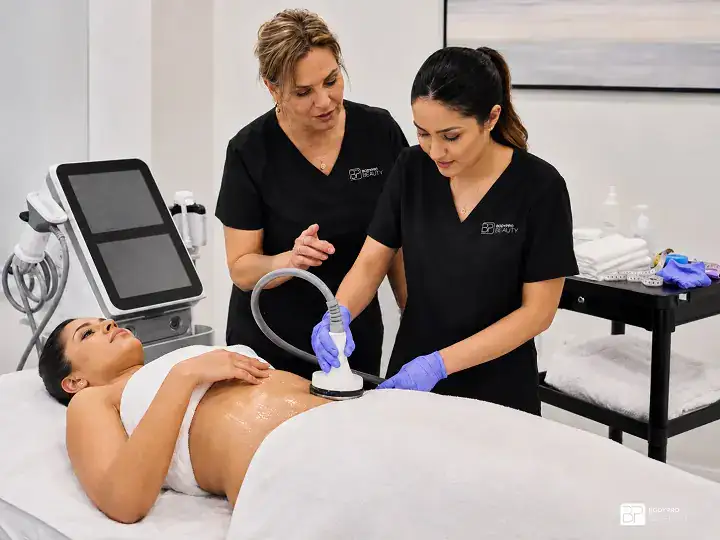
Students review program-specific body-contouring technologies, visible body-area considerations, contraindications, client consultation, equipment safety, cosmetic service planning, documentation and supervised practical procedures. Training emphasizes client communication, client comfort and appropriate expectations within cosmetic scope.
Interested in focused training?
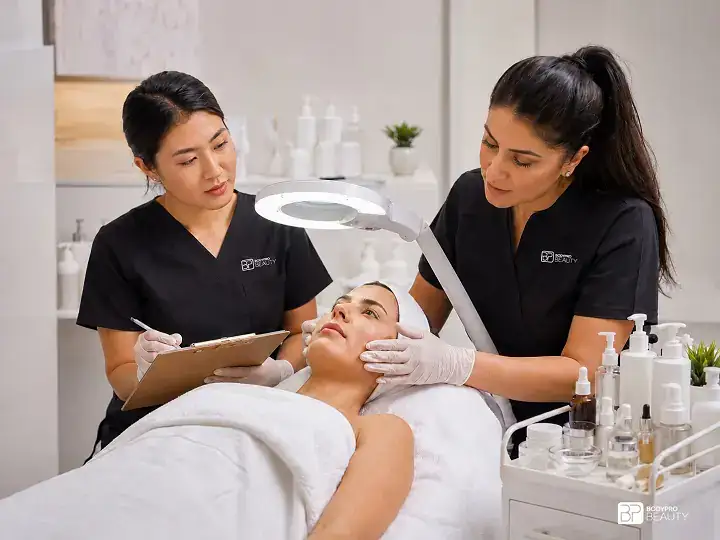
Skincare Specialist
Students develop knowledge of visible skin characteristics, professional consultation, cosmetic product selection, contraindications, service planning, documentation and supervised skincare procedures. Training emphasizes individualized cosmetic skincare services, realistic client guidance and appropriate referral when concerns fall outside professional scope.
Interested in focused training?
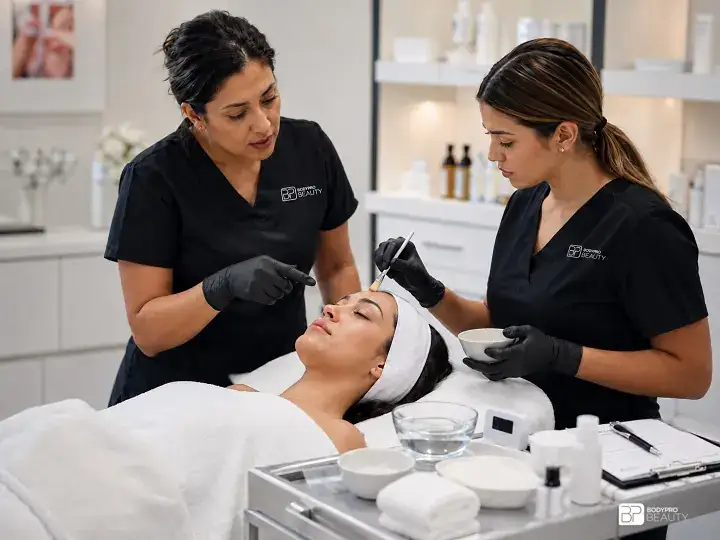
Chemical Peels
Students review chemical peel types, ingredient and strength considerations, visible skin characteristics, contraindications, product selection, application procedures, client consultation and pre- and post-service guidance within cosmetic scope. Training emphasizes product-specific protocols, documentation and professional service planning rather than diagnosing or treating medical skin conditions.
Interested in focused training?
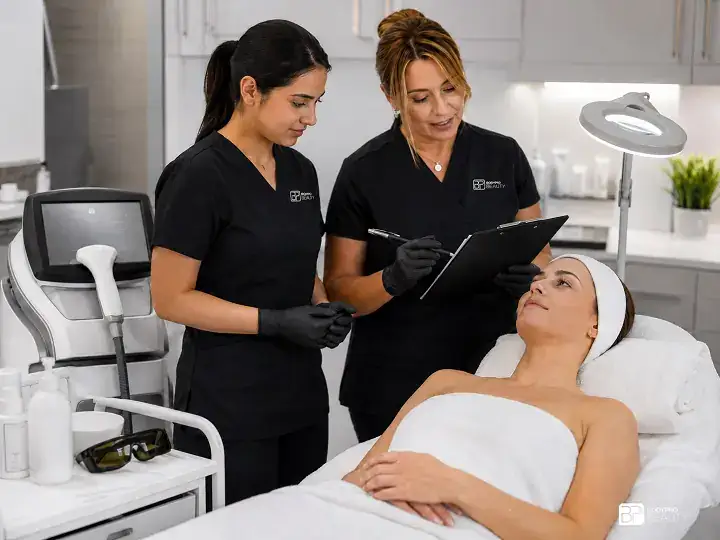
Photo Rejuvenation
Students review light-based photo-rejuvenation concepts, visible skin characteristics, client suitability considerations, contraindications, equipment safety, consultation, service planning, documentation and supervised program-specific procedures. Training emphasizes cosmetic appearance-focused applications and realistic client communication rather than diagnosing or treating medical skin conditions.
Interested in focused training?
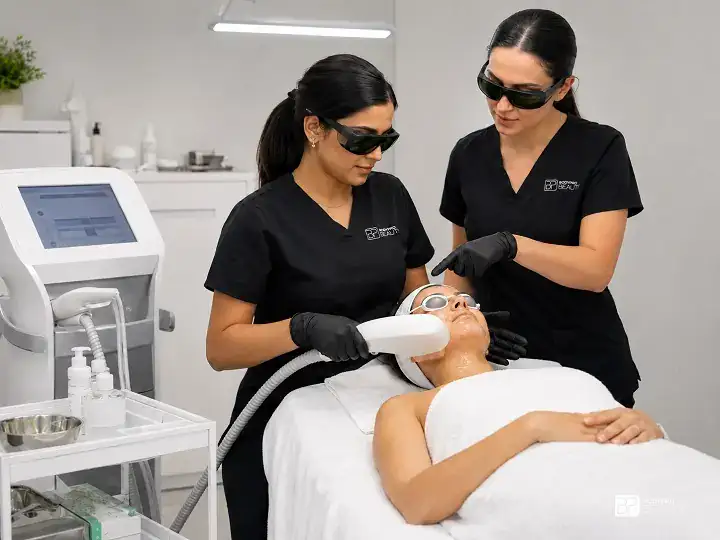
IPL Services
Students study intense pulsed light principles, visible skin characteristics, client considerations, contraindications, equipment safety, service planning, consultation, documentation and supervised program-specific procedures. Training includes IPL applications related to hair reduction and foundational light-based cosmetic services, with attention to equipment settings, client suitability and safe operating practices. Students also develop foundational knowledge of Fitzpatrick skin typing, service-area preparation, parameter awareness and pre- and post-service guidance within the professional scope of cosmetic IPL services. Training focuses on cosmetic IPL applications and realistic client communication rather than diagnosing or treating medical skin conditions.
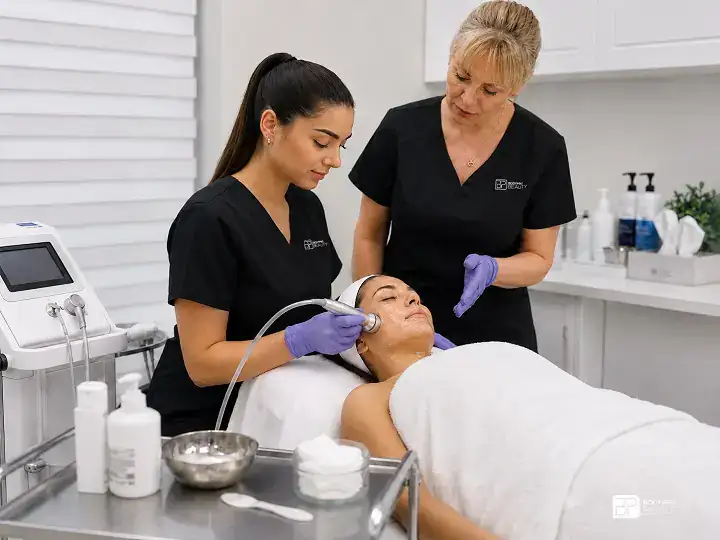
Non-Invasive Facial Technology
Students are introduced to program-specific radiofrequency, ultrasound and microcurrent concepts, equipment considerations, contraindications, client consultation and cosmetic facial service planning. This module focuses on facial applications rather than body contouring procedures.
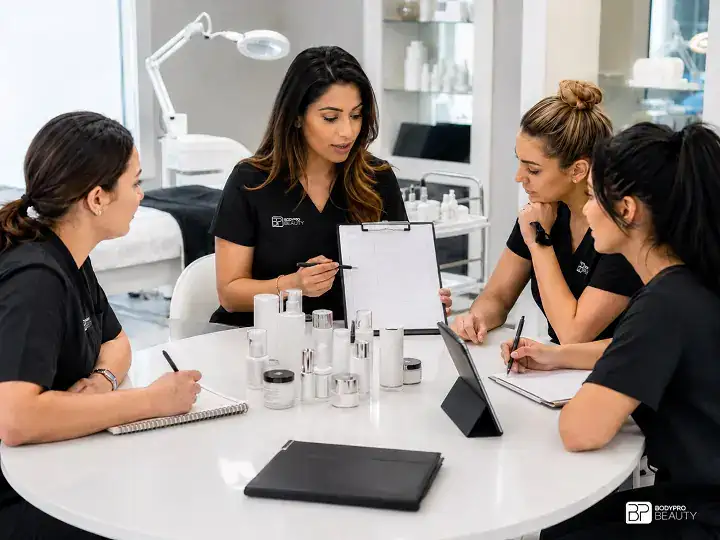
Customer Service & Business Management
Students develop practical knowledge of client communication, service-plan documentation, client education, professional records and introductory business operations. The module supports organized client service, responsible communication and awareness of common administrative responsibilities in aesthetics settings.
What to Expect From Medical Aesthetics Training at Body Pro Beauty
The Medical Aesthetics Diploma combines instructor-led theory, equipment demonstrations and supervised practical learning across advanced skincare and aesthetic-technology curriculum areas.
Instructor Guidance
Students receive theory instruction, equipment demonstrations, guided feedback and opportunities to ask questions while developing program-specific knowledge and practical techniques.
Supervised Practical Learning
Hands-on activities support consultation, equipment preparation, service planning, contraindication awareness, documentation and professional client care across the program’s advanced skincare modules.
Safety and Professional Scope
Business and Client-Service Foundations
Who Should Consider a Medical Aesthetics Diploma?
The Medical Aesthetics Diploma may suit students interested in advanced skincare, laser, IPL, device-based cosmetic services, professional consultation and supervised practical learning. The appropriate pathway depends on each student’s previous education, schedule, training goals and preferred area of aesthetics study.
Students Beginning Medical Aesthetics Training
For students seeking a structured introduction to advanced skincare, laser and IPL concepts, cosmetic service planning, client consultation, equipment safety and supervised practical learning.
Learners Expanding Previous Aesthetics Education
For eligible students or professionals who want to build on previous beauty, skincare or aesthetics education through more focused learning in advanced skincare and device-based cosmetic services. Admissions should confirm prerequisites and the appropriate program pathway.
Students Comparing Spa and Medical Aesthetics
Students interested in broad spa, beauty, nail, makeup and waxing education may prefer the Advanced Aesthetics Diploma. Students primarily interested in laser, IPL, chemical peels, microdermabrasion and device-based cosmetic skincare education may find the Medical Aesthetics Diploma more aligned with their goals.
Students who are unsure which program fits their background and goals should speak with admissions before applying. Admissions can clarify entry requirements, schedule options, practical components, focused certificate relationships and current program availability.
Study Medical Aesthetics at a Registered Career College in Brampton
Body Pro Beauty & Aesthetics Academy Inc. is registered as a career college under the Ontario Career Colleges Act, 2005.
Prospective students can consider this institutional information alongside the current Medical Aesthetics Diploma curriculum, official credential, program contract, schedule, tuition, admission requirements and supervised practical components when comparing training options.
Institutional registration should not be interpreted as separate government approval, accreditation or professional recognition of every curriculum area, device-specific service or related certificate program.
Medical Aesthetics Diploma vs. Advanced Aesthetics Diploma
Body Pro Beauty offers two distinct diploma pathways for different educational goals. The Medical Aesthetics Diploma provides integrated education in advanced skincare, laser, IPL and aesthetic-device technologies. Graduates who successfully complete its requirements receive the official Para-Medical Skincare Technician Diploma. The Advanced Aesthetics Diploma provides broader spa, skincare, makeup, nail, waxing, threading, aromatherapy and beauty-service education.
Medical Aesthetics Diploma FAQs
Explore common questions about Body Pro Beauty’s Medical Aesthetics Diploma, including curriculum, the official credential, schedules, hands-on learning, payment options, admission pathways and professional scope.
Frequently Asked Questions About Medical Aesthetics Training
Review important details about what students study, the credential awarded, full-time and part-time formats, supervised laser and IPL learning, admissions considerations and the boundaries of cosmetic skincare practice.
What is included in Body Pro Beauty’s Medical Aesthetics Diploma?
Body Pro Beauty’s Medical Aesthetics Diploma pathway covers advanced skincare, laser and IPL, Hydrafacial services, microdermabrasion, chemical peels, photo rejuvenation, body-contouring technologies, skincare consultation, contraindications, cosmetic service planning, documentation, client education and business fundamentals. Training combines theory, instructor demonstrations and supervised practical learning.
What credential do graduates receive?
Students who successfully complete the program requirements receive a Para-Medical Skincare Technician Diploma from Body Pro Beauty & Aesthetics Academy Inc. “Medical Aesthetics Diploma” describes the program’s primary educational category, while Para-Medical Skincare Technician Diploma remains the official credential name.
How long is the Medical Aesthetics program?
The Para-Medical Skincare Technician Diploma is currently offered as a seven-month full-time weekday program and a one-year part-time weekend program. Program dates and scheduling may change, so prospective students should confirm the current duration, attendance requirements and next available start date with admissions.
Does the program include hands-on laser and IPL training?
Yes. The diploma includes supervised practical learning in laser and IPL principles, skin and hair considerations, contraindications, equipment safety, client consultation, service planning, documentation and program-specific procedures. Admissions can confirm the equipment currently used and the practical components included in each schedule format.
What is the difference between Medical Aesthetics and Advanced Aesthetics?
The Medical Aesthetics Diploma pathway focuses on advanced skincare, laser and IPL, chemical peels, microdermabrasion, photo rejuvenation and device-based cosmetic services. The Advanced Aesthetics Diploma provides broader spa and beauty education covering skincare, body services, makeup artistry, nail care, waxing, threading and related aesthetics disciplines.
Is the program available full-time and part-time?
Yes. Body Pro Beauty currently offers a full-time weekday format and a part-time weekend format. Both schedules cover the same diploma curriculum and lead to the same Para-Medical Skincare Technician Diploma. Students should confirm current class dates, attendance requirements and availability before enrolling.
Does Body Pro offer payment options for the diploma?
Body Pro Beauty offers interest-free payment options for the Medical Aesthetics Diploma. Students should review the payment-plan overview and contact admissions for current tuition, applicable fees, payment schedules, enrolment terms and refund or cancellation information.
Can beginners enrol in the Medical Aesthetics Diploma?
The program may provide a structured pathway for students entering medical aesthetics as well as learners building on previous beauty or skincare education. Admission requirements may vary, so prospective students should ask admissions to confirm their eligibility, prerequisites and the most appropriate program pathway.
What should students confirm before choosing a Medical Aesthetics program?
Students should confirm the official credential, admission requirements, curriculum, program duration, schedule, supervised practical components, equipment used, model-practice expectations, supplies, tuition, payment terms, completion requirements and professional scope. They should also ask whether additional device-specific training, experience or employer requirements may apply to their intended workplace.
Does the diploma qualify graduates to diagnose or treat medical skin conditions?
No. The program focuses on advanced cosmetic skincare and medical aesthetics education. It does not qualify graduates to diagnose or treat dermatological disease or other medical conditions. Students learn to recognize visible skin characteristics, identify contraindications, work within professional scope and refer clients to an appropriate healthcare professional when necessary.
Compare Medical Aesthetics & Skincare Programs
Not sure whether the Medical Aesthetics Diploma, a focused certificate, an online course or a broader beauty and aesthetics pathway is the right fit? Compare Body Pro Beauty’s programs by curriculum scope, credential, prerequisites, schedule, delivery format, supervised practical components and training goals.
Page reviewed by Donna Kalsey
Director, Body Pro Beauty & Aesthetics Academy Inc.
Donna Kalsey is the Director of Body Pro Beauty & Aesthetics Academy Inc., a registered career college in Brampton serving students across the Greater Toronto Area. Her responsibilities include academy leadership, program oversight, instructor guidance, student mentorship, and the review of public-facing educational content.
Donna reviewed the academy-authored content on this page for factual accuracy, clarity, current school or program information, appropriate source attribution where applicable, and usefulness to prospective students.
Reviewed for: factual accuracy, content clarity, current information, source transparency where applicable, and student guidance.
Last updated: August 18, 2026